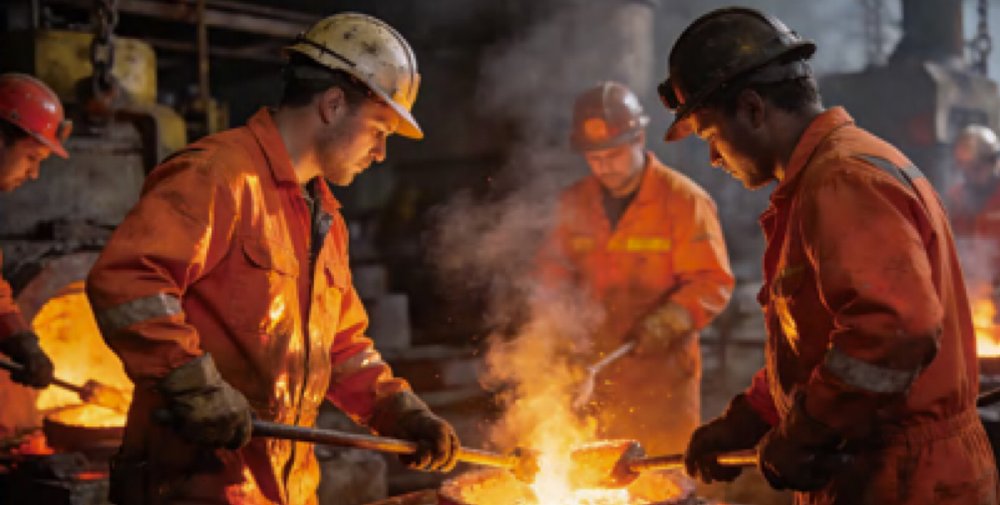
A flame resistant jacket is the outer layer crews pull on over everything else — it has to protect without cooking the wearer, and it has to keep doing so after a season of industrial washes. Our FR jacket program runs on documented FR fabric platforms with conductive fibre carried in the blend, in both a classic woven jacket and a weather-facing FR softshell.
Jacket styles in production
FR Jacket — core style
- Fabric platform: modacrylic-cotton FR blend (60/38/2 with carbon fibres) or cotton FR (99% cotton / 1% antistatic fibre)
- Weight: 270 GSM standard cloth; garment builds up to 360 GSM with lining options
- Details: storm placket over front closure, stand collar, adjustable cuffs, chest and lower pockets, action pleats for reach
- Program basis: MOQ 3,000 pieces per style
FR Softshell Jacket — weather layer
A 350 GSM three-layer build: FR face cloth with an FR polyurethane membrane and a modacrylic-blend inner. It gives wind and light-rain protection for outdoor crews — utility line work, plant yards, loading areas — while staying inside the FR program instead of forcing buyers to source a separate non-FR shell. Water-resistant finish options are quoted per program.
FR Lined Jacket — cold-shift option
For winter maintenance and northern sites, the core jacket pattern accepts quilted or fleece linings on the same FR face fabric, keeping one size chart and one compliance story across your seasonal range.
Antistatic behaviour, stated plainly
Our core FR platforms carry conductive fibre in the blend (carbon fibres in the modacrylic platform, antistatic fibre in the cotton platform). That is the construction our listings describe as antistatic workwear: the garment helps dissipate static build-up as part of the fabric, rather than relying on a topical finish that fades in the wash. Read the background explainer: anti-static workwear basics.
Specification and compliance basis
Jacket programs are specified against NFPA 2112 and EN ISO 11612 frameworks; arc-focused buyers can ask which platforms we put forward for ASTM F1506-based specifications. Fabric composition, GSM and construction are confirmed in the quotation and held from sample to bulk — the jacket your crew approves is the jacket that ships.
Program details
- Size run: full adult range on one graded chart; women's cut available on the jacket block
- Branding: embroidery, heat transfer or woven patches; reflective tape can be added for combined FR + visibility styles
- Inspection: AQL 2.5 / 4.0 release; SGS / ITS third-party inspection accepted
- Lead times: samples 7 days; bulk 35 days (China) or 90–120 days (Myanmar), production time only
Frequently asked questions
Can an FR jacket also be high-visibility? Yes. FR cloth in fluorescent yellow or orange, plus reflective tape placed to EN ISO 20471 rules, produces a dual-certified-style garment program for rail, utility and road crews. See the hi-vis jackets page for the visibility side of the range.
How long does FR protection last? Service life is governed by the documented care instructions and your inspection criteria: FR performance for each platform is evidenced by test reports for the specified standard, and a jacket is retired when the fabric is worn thin, damaged or contaminated — the same retirement discipline as any PPE. What we commit to in writing is the specification itself: composition, weight and standard framework, held from sample to bulk.
What do you need from us to quote? Target standard, jacket style (woven / softshell / lined), fabric preference if you have one, quantity per size, and branding requirements. We reply with fabric cards, GSM options and MOQ confirmation.