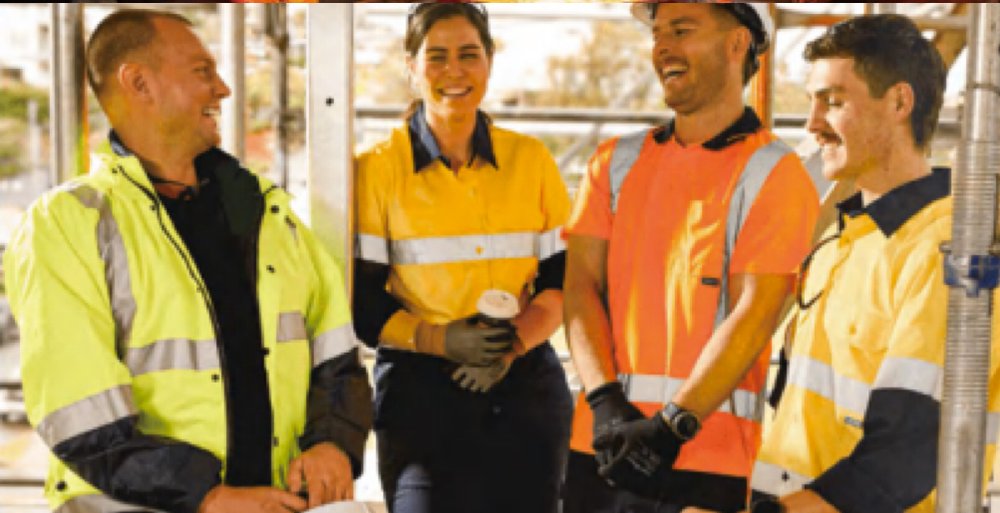
Most buyers do not need a garment; they need a crew dressed — jacket, trousers, vest and shirt in one shade of fluorescent, one size system, one delivery. Hi vis workwear is the program page for that purchase: matched reflective clothing sets built in our own factory, so the yellow on the jacket is the yellow on the trousers, in January and in the reorder next year.
Program building blocks
A standard program mixes from the same fabric and color system:
- Hi vis jackets — T/C work jacket, 3-layer softshell, winter builds
- Hi vis vests — mesh, solid and supervisor builds over any layer
- Hi vis shirts — reflective tees, piqué polos, terry and poly-cotton shirts
- Hi vis trousers — work trousers in poly-cotton hi-vis cloth (80/20, 230 GSM) with reflective leg bands, cargo and flat-front builds
- Matched sets — the Myanmar-line softshell jacket + work pants set (MOQ 5,000 sets) for one-carton crew issue
Why one factory for the whole set matters
Reflective clothing only reads as a uniform when the components match — and fluorescent shades are notoriously hard to hold across suppliers and dye lots. Because our chain runs from weaving and dyeing through garment making in one group, a program's ground shade is approved once and held across jackets, trousers and shirts, with the same silver tape family across all of them. When your contract renews, the reorder matches the original issue instead of starting a visible "second uniform".
Safety workwear beyond hi-vis
Programs often pair hi-vis garments for outdoor crews with flame resistant clothing for plant crews under one purchase order. We run both ranges in the same factory system, with combined sizing documentation and one inspection protocol — tell us the split when you inquire and the quote will be structured as one program, not two separate orders.
Standards and specification
Hi-vis components are patterned to EN ISO 20471 and ANSI/ISEA 107 logic; rain-facing pieces can be specified with EN 343 in mind. Each component's fabric, weight and tape layout is listed in the program quote, and shipments release under AQL 2.5 / 4.0 with third-party inspection (SGS / ITS) accepted.
Program details
- Quantities: jackets from 3,000 pieces; shirts and tees from 5,000; trousers and sets quoted per program (sets from 5,000)
- Branding: one logo system across all components — print, transfer and embroidery matched by garment
- Lead times: samples 7 days per style family; bulk 35 days (China) or 90–120 days (Myanmar) production
Frequently asked questions
Can different sites in our company run different colors in one program? Yes. Fluorescent yellow for one division and orange for another is a common split — the size system, labels and pricing structure stay unified.
Do you supply size documentation for tenders? Yes. Graded size charts, fabric specifications and tape layouts are provided in the program documentation pack your tender team can attach.
What if we only need trousers to match an existing jacket supplier? Send a physical jacket or a shade standard; we will lab-dip the trouser cloth against it and quote the trousers as a standalone program.
Documentation for tender-driven buyers
Public and corporate tenders rarely buy on a sample alone; they buy on paper that survives a compliance review. Program quotations from this range therefore include the documents tender teams ask for: graded size charts for every component, fabric specification sheets with composition and GSM, tape layout descriptions, and the standard-and-class basis each component is built to. If your tender names a document we have not listed, ask — the program file is assembled per buyer, and adding a sheet is easier before production than after it.