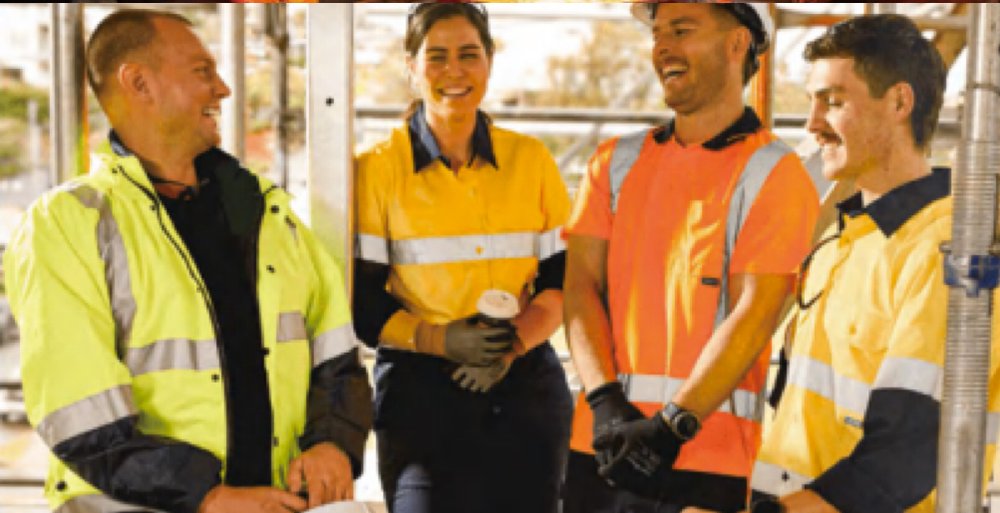
Hi vis vests are where most visibility programs start — and where the standard matters most, because a vest is usually the garment a whole mixed crew wears, from the site manager to the day labourer. Our high visibility vest range is built to the pattern and tape-placement logic of EN ISO 20471 and ANSI/ISEA 107: fluorescent background material doing the daytime work, silver reflective tape doing the night work, and the proportions between them held to what the class system expects.
What makes a vest compliant-shaped
A rated visibility garment is a ratio, not a color. The fluorescent ground has to cover the torso in the proportions the standard sets, and the reflective bands have to encircle the body so a wearer is outlined from any direction. Our vest patterns are cut to that logic:
- Background material in fluorescent yellow or fluorescent orange, in mesh or solid tricot
- Reflective bands encircling the torso — one or two horizontal bands, with shoulder braces on the H-pattern builds
- Tape options from glass-bead reflective tape for volume programs to micro-prismatic tape where brighter return is specified
- 360° continuity: bands are not broken by closures; the front closure overlaps so the band line reads unbroken at night
Vest builds in the range
Class-Style Mesh Vest
Breathable mesh body for hot sites, two-band or H-pattern tape, hook-and-loop or zip closure. The default answer for construction and warehousing programs in warm climates.
Solid Tricot Vest
A flat, print-friendly ground for fleets and contractors whose vests carry big back logos — see the full branding and configuration options on our safety vests program page.
Two-Tone & Supervisor Builds
Dark lower panels that keep the garment presentable longer, extra pockets, ID windows and mic tabs — the builds crew leaders wear, specified per program.
Breakaway Vest
Five-point breakaway construction (shoulders, sides, front) for crews working around moving machinery or rail, where a snagged garment must release instead of pulling the wearer in.
Colors beyond yellow and orange
Fluorescent yellow and orange are the rated grounds. For non-rated roles — event staff, parking, visitors — the same patterns run in solid red, blue, green, pink and black, clearly quoted as non-rated event vests so your catalogue never mixes the two. Two-tone fluorescent builds (yellow/navy, orange/navy) are the most reordered middle ground.
Program details
- Quantities: MOQ confirmed by configuration in the quote, mixed sizes inside the run
- Branding: screen print, heat transfer, reflective print; proofed on the real ground color
- Lead times: samples 7 days; bulk 35 days (China) or 90–120 days (Myanmar) production
- Inspection: AQL 2.5 / 4.0 release; SGS / ITS third-party inspection accepted
Frequently asked questions
What is the difference between a hi vis vest and a safety vest? Nothing structural — both terms describe the same garment family. "Safety vest" is the trade term in North America; "hi vis vest" is the common term in the UK, EU and Australia. Our safety vest program page covers the full configuration matrix for the same products.
Which colors count as high visibility? Fluorescent yellow and fluorescent orange (and in the EN system, fluorescent red) are the rated background colors. Other colors can look bright but do not meet the chromaticity requirements of EN ISO 20471 or ANSI/ISEA 107 — our blog covers this in hi vis colors and background fabrics.
Can vests be made in children's or very large sizes? Yes. Size runs extend both ways on program orders — small-frame and 4XL–6XL builds are graded from the same pattern block.